Modern Search Engine Ranking Factors: What Actually Matters in 2025
Ranking Today Is Different From Five Years Ago
I have been doing SEO since the days when Google PageRank was the single number everyone obsessed over. Back then, getting a few directory links and stuffing a keyword into your title tag twenty times could push you to the top. That world is gone. The search engine ranking factors that matter now are more nuanced, more behavioral, and far harder to game. If you still think keyword density is a primary lever, you are likely wasting time on tactics that have not worked in years.
The shift toward user experience and content relevance did not happen overnight. Google introduced Core Web Vitals as a formal ranking signal, mobile-first indexing became the default, and the old link-counting approach got buried under layers of machine learning. Today, understanding search engine ranking factors means looking at how real people interact with your pages, not just how many backlinks you have collected.
Links Still Matter, But Not How You Think
Backlinks remain a strong signal, but their quality has changed dramatically. A single relevant link from a site with genuine domain authority in your niche can outweigh hundreds of spammy directory links. I have seen campaigns where cutting low-quality links actually improved rankings because Google stopped ignoring the site. Tools like Ahrefs and Moz help you evaluate link profiles, but they cannot tell you whether a link feels earned to a human reader. That judgment comes from understanding your audience and building relationships, not from a metric.
Anchor text is another area where old habits die hard. Using exact-match anchor text on every link used to be a shortcut. Now, it looks manipulative if overdone. A natural mix of branded, generic, and topical anchor text signals that your link profile is organic. If every inbound link says "best SEO software" using those exact words, Google starts to question whether the links are editorial or paid. I recommend checking your backlink reports quarterly through Google Search Console and pruning anything that looks forced.
User Experience Is the New Link Building
The biggest change in search engine ranking factors over the last five years is the weight placed on user experience. Google now treats page experience signals almost as seriously as it used to treat links. Core Web Vitals gave us specific metrics - Largest Contentful Paint, First Input Delay, Cumulative Layout Shift - but the spirit behind them is older than those acronyms. A page that loads slowly, jumps around while rendering, or makes you wait to tap a button will lose visitors regardless of how good the content is.
Site speed is not just about server response times. It is about how the page feels. I once worked on a site that had great content and solid links but ranked poorly for its main queries. The issue turned out to be a third-party script that delayed rendering by two seconds. After moving that script to load after the main content, rankings improved within weeks. That kind of fix is not glamorous, but it reflects the reality of modern ranking factors: small technical details compound into real user experience differences.
Mobile-first indexing means Google primarily uses the mobile version of your page for ranking and indexing. If your mobile site is stripped down or missing content that the desktop version has, you are effectively competing with one hand tied behind your back. I have audited sites where the mobile page had no schema markup, while the desktop version had rich snippets for reviews and events. Fixing that mismatch alone lifted their click-through rates noticeably.
Content Relevance and Search Intent
Keyword density used to be a primary factor. You could count how many times a phrase appeared and adjust accordingly. Today, content relevance is more about whether your page satisfies the searcher's intent. If someone searches "how to fix a leaky faucet," they probably want a step-by-step guide, not a history of plumbing. Matching search intent means understanding the format, the depth, and the angle that the query demands.
Google E-A-T - expertise, authoritativeness, trustworthiness - is not a direct ranking factor in the way that backlinks are, but it influences how Google evaluates content in sensitive areas like health, finance, and legal advice. If your site covers topics where accuracy matters, demonstrating real credentials and citing reliable sources becomes part of your content strategy. Schema markup for author profiles and reviews can help, but it is the substance behind the markup that counts.
I have seen sites with thin content rank temporarily only to drop after the next core update. The ones that stay competitive invest in genuine expertise. They do not write a 300-word page targeting a high-volume keyword and expect it to hold. They build content that answers the question thoroughly, with original research or practical examples that a reader would actually bookmark.
Technical Foundations Still Matter
You cannot rank well if Google cannot crawl and index your pages correctly. Robots.txt files, canonical tags, and XML sitemaps are not glamorous, but they are table stakes. I have seen sites where a misconfigured robots.txt blocked entire sections of content from being indexed. Fixing that one error brought in thousands of organic visits. Similarly, canonical tags that point to the wrong URL can dilute page authority across duplicate versions of the same content.
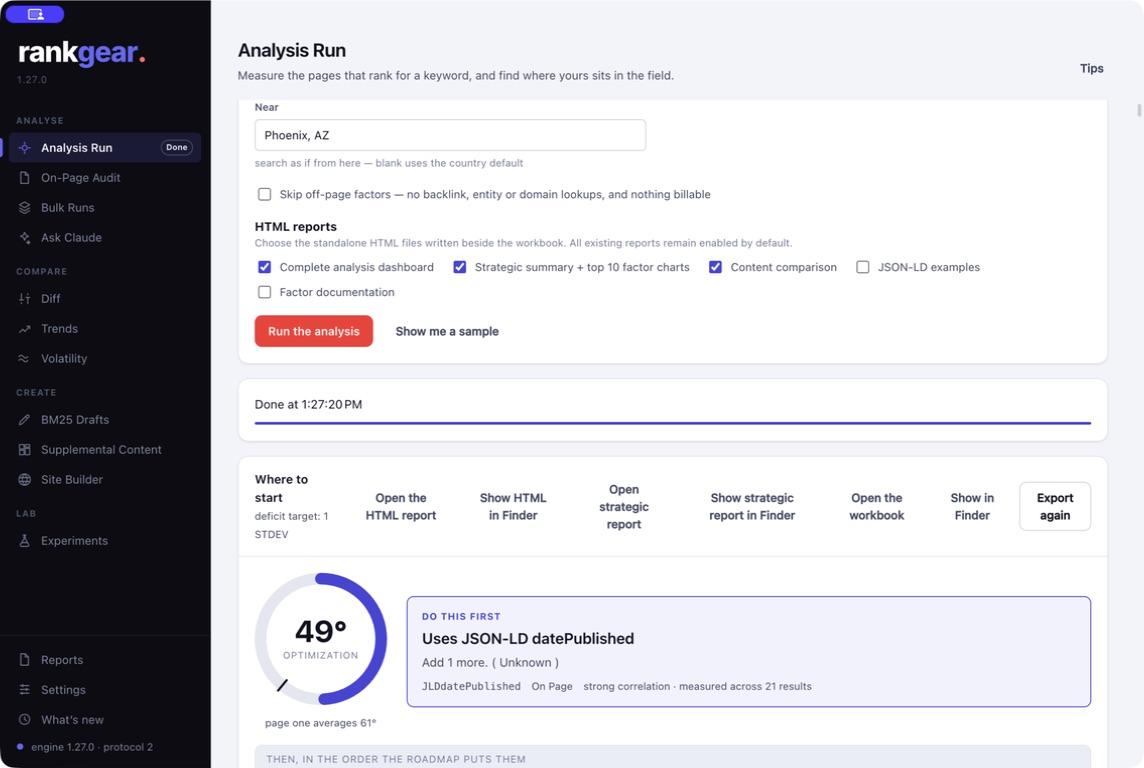
Canonical tags are especially important for e-commerce sites with faceted navigation. If every filter combination creates a new URL, you can end up with hundreds of near-duplicate pages. Setting proper canonicals consolidates link equity and prevents Google from wasting crawl budget on pages that do not need to be indexed. Tools like RankGear can help identify these issues by analyzing how ranking factors apply to specific queries, but the fundamental fix is structural.
What the Data Actually Shows
I have run dozens of correlation studies between various signals and ranking positions. The strongest single factor remains content relevance, measured by how well a page matches the query's search intent. Backlinks and domain authority still show strong correlation, but the relationship is weaker than it was a decade ago. Page authority - the strength of a specific page rather than the whole domain - has gained importance as Google gets better at evaluating individual URLs.
One thing that surprises many people is that site speed correlates with rankings only up to a point. Once your page loads in under three seconds on mobile, further improvements do not show a clear ranking benefit. That does not mean you should ignore speed, but it means the threshold is lower than most SEOs assume. The real gains come from making sure the page does not degrade the user experience through intrusive ads, slow scrolls, or unresponsive design.
Practical Steps You Can Take Today
If you want to improve your site's alignment with current search engine ranking factors, start with these actions:
- Check your Core Web Vitals in Google Search Console and prioritize fixing any failing metrics on your top-traffic pages.
- Review your backlink profile in Ahrefs or Moz and disavow links from sites that look irrelevant or spammy.
- Ensure every page has a clear match between its content and the search intent of its target keyword.
- Verify that your mobile pages contain the same content and schema markup as your desktop versions.
- Run a crawl test to confirm that robots.txt and canonical tags are not blocking important pages.
These steps are not a one-time checklist. Ranking factors evolve, and what works today may shift after the next algorithm update. The sites that perform well over the long term are the ones that treat SEO as continuous improvement, not a set-it-and-forget-it project.
Wrapping Up
Understanding search engine ranking factors is no longer about memorizing a list of signals. It is about understanding how people search, what they expect from a page, and whether your site delivers that experience better than the alternatives. The technical details matter, but they serve a bigger goal: helping real users find useful answers quickly. If you keep that focus, the rankings tend to follow.